

Self-reflection tool for Designated Safeguarding Leads (DSLs)
Example
School details
School name: Wellington College
Location: Crowthorne
Phase: Secondary
Number of pupils: 1,180
Contact details: Delyth Lynch, Director of Safeguarding dal@wellingtoncollege.org.uk

Download the example
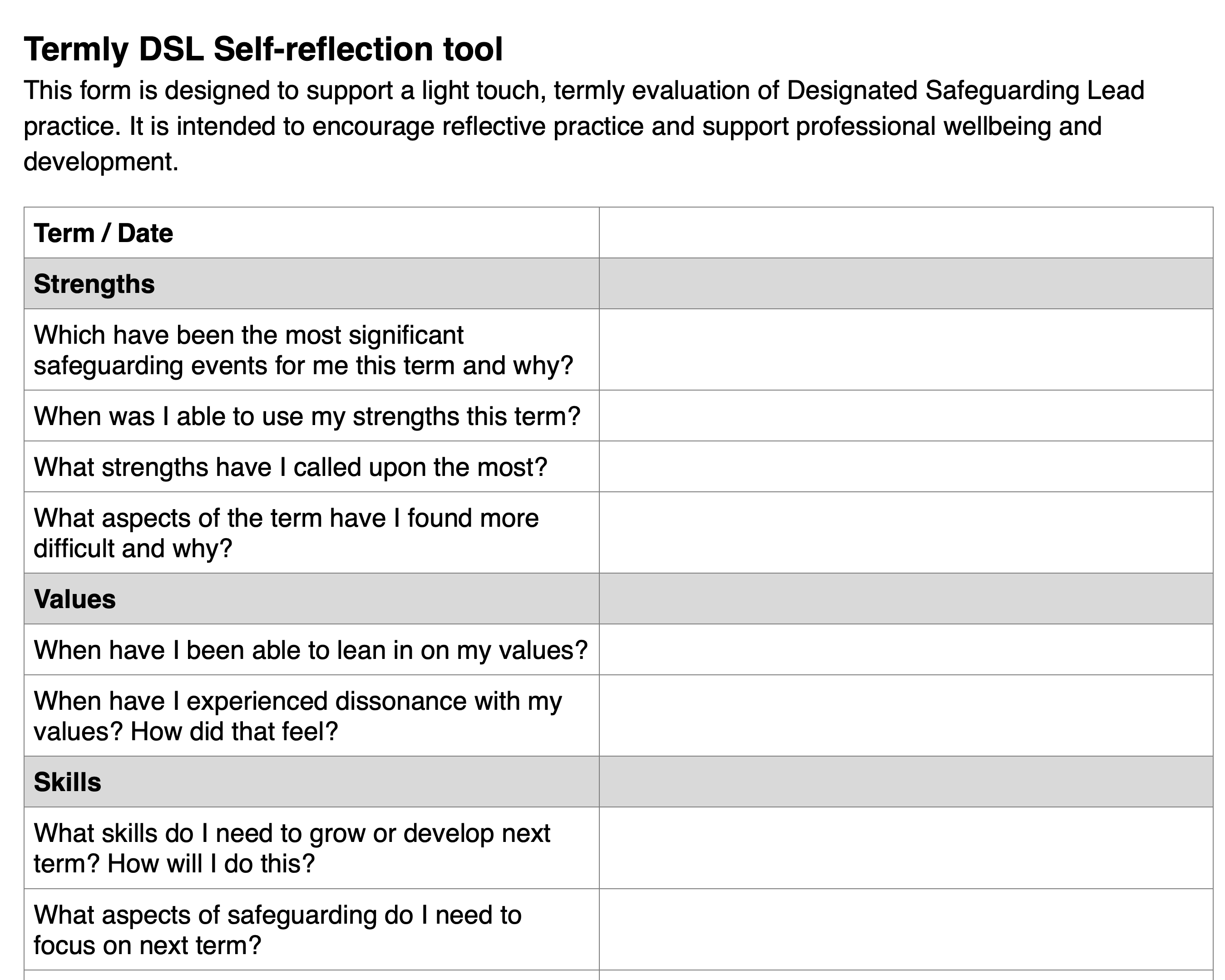
Background from Delyth Lynch, Director of safeguarding
This checklist was developed to support Designated Safeguarding Leads (DSLs) to reflect regularly on their safeguarding practice in a structured but manageable way. In busy school environments, reflective practice can easily be deprioritised, despite its importance for effective decision making, professional wellbeing and continuous improvement.
The checklist is designed as a light touch, termly tool that helps DSLs:
- step back from day-to-day casework
- consider the impact of their work on themselves and others, and
- identify priorities for the next term.
It supports reflective and sustainable safeguarding leadership without adding unnecessary workload. It can also be used to inform supervision, appraisal and professional development discussions.
How to use this resource
- Adapt it to reflect your setting, phase and local context
- Use it to assess how effective your safeguarding work and practice has been over the term.
Who this resource is for
- Designated Safeguarding Leads
- Deputy Designated Safeguarding Leads
- Senior leaders with safeguarding responsibility
- Safeguarding teams in schools and colleges (all phases)
Key benefits
This resource supports DSLs to reflect regularly and proportionately on their safeguarding practice, helping to strengthen decision-making, oversight and professional wellbeing.
It provides a clear structure for termly reflection that enables DSLs to:
- identify what is working well
- recognise pressures or risks early, and
- set focused priorities for the next term.
The light touch format helps embed reflective practice without adding unnecessary workload, while also creating useful evidence to inform supervision, appraisal and governance discussions. When used consistently, the self-evaluation form supports sustainable safeguarding leadership and continuous improvement across the year.
Share this resource


Share your ideas
You can help other school leaders by sharing what has worked in your school.

Help improve our service
Your feedback will help us improve our service on workload and wellbeing for all school staff.